
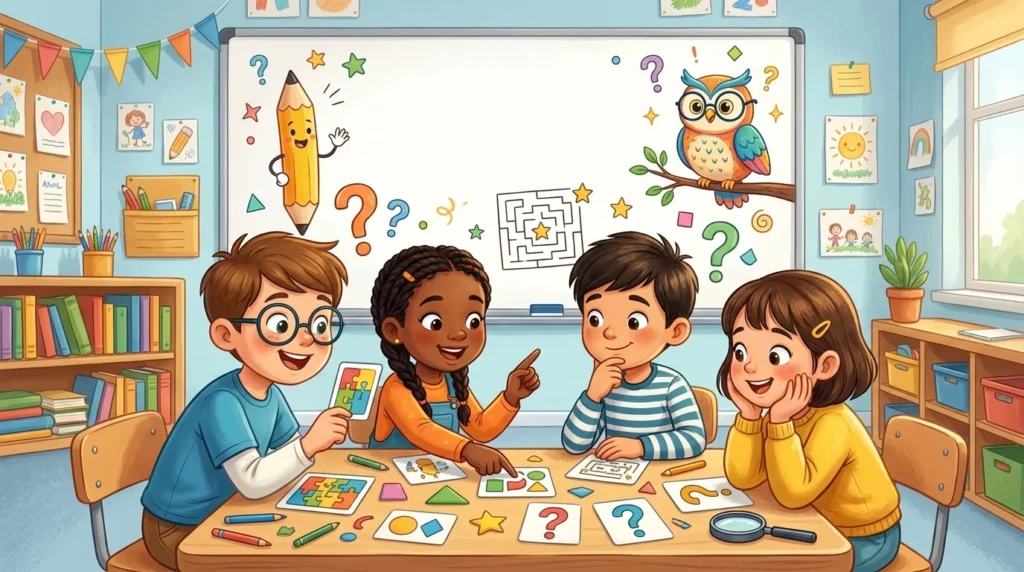
Looking for riddles for elementary students that make kids think, laugh, and learn at the same time? The right riddles can turn an ordinary classroom activity, family game, or quiet afternoon into an exciting brain challenge. From simple animal riddles and funny questions to clever word puzzles and everyday mysteries, these riddles give young learners plenty of chances to think creatively and solve problems.
Each question encourages children to notice clues, use their imagination, and discover answers they might not expect. Teachers can use them as warm-up activities, brain breaks, or fun group competitions, while parents can enjoy them during car rides, playtime, or family evenings.
The collection is designed to be easy to read, with answers placed close to each question so children can follow along without confusion. Whether kids are just starting school or ready for trickier challenges, there is something here to spark curiosity and make learning more enjoyable.
1. Easy Riddles for Elementary Students
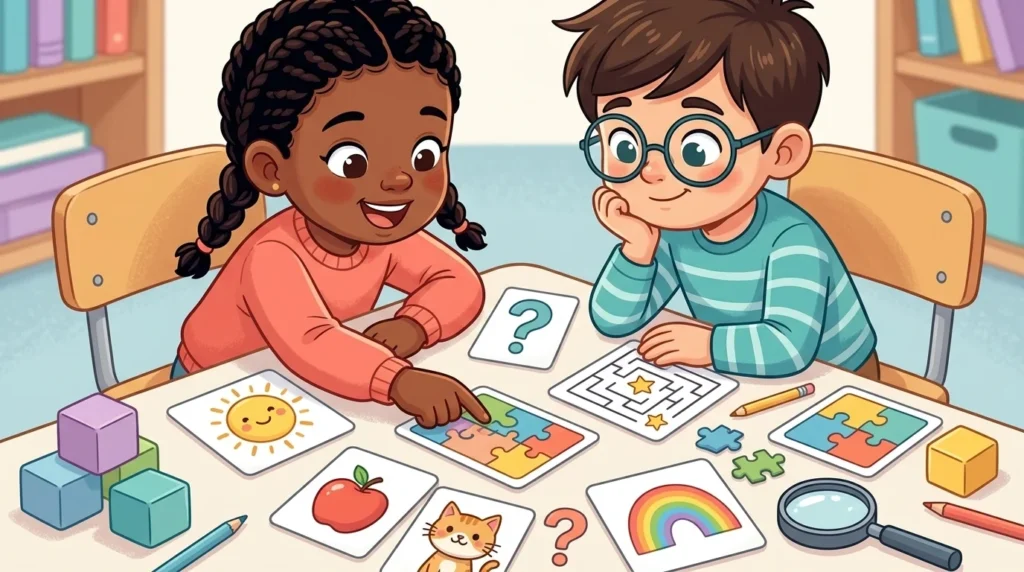
These simple brain teasers are perfect for younger children who are learning how to solve riddles.
– 🌞 Riddle: I shine in the sky and make the day bright. What am I? Answer: The sun.
– 🐱 Riddle: I have whiskers, a tail, and love to say meow. What am I? Answer: A cat.
– 🍌 Riddle: I am yellow, soft inside, and monkeys love me. What am I? Answer: A banana.
– 🕰️ Riddle: I have a face and two hands, but I cannot clap. What am I? Answer: A clock.
– 🌧️ Riddle: I fall from clouds but never get hurt. What am I? Answer: Rain.
– 🐟 Riddle: I live in water and use fins to swim. What am I? Answer: A fish.
– 📚 Riddle: I have many pages and help you learn new things. What am I? Answer: A book.
– 🥚 Riddle: I have a shell but no door. A baby chick may grow inside me. What am I? Answer: An egg.
– 🌙 Riddle: You can see me in the night sky, and I change my shape. What am I? Answer: The moon.
– ✏️ Riddle: I help you write, and my tip gets shorter as you use me. What am I? Answer: A pencil.
These easy riddles for elementary students are great for morning warm-ups, reading breaks, and quick games at home. Encourage children to explain how they found each answer instead of simply guessing.
2. Funny Riddles for Elementary School Kids
Get ready for silly answers, playful word tricks, and plenty of giggles!
– 🦆 Riddle: What do you call a duck that loves telling jokes? Answer: A wise quacker!
– 🧊 Riddle: What did one ice cube say to the other? Answer: You are so cool!
– 🐝 Riddle: What is a bee’s favorite school subject? Answer: Spelling!
– 🍕 Riddle: Why did the pizza go to school? Answer: To become a little smarter!
– 🐸 Riddle: What kind of shoes do frogs wear? Answer: Open-toad sandals!
– 🥚 Riddle: Why did the egg hide? Answer: It was a little chicken!
– 🐄 Riddle: What do cows read in the morning? Answer: The moos-paper!
– 🍌 Riddle: Why did the banana visit the doctor? Answer: It was not peeling well!
– 🐠 Riddle: What do fish use to make phone calls? Answer: A shell phone!
– 🧹 Riddle: Why was the broom late for school? Answer: It swept in!
Funny riddles for elementary students make learning feel less like work. Teachers can ask children to share their own silly answers, too, because creative thinking is part of the fun.
3. Math Riddles for Elementary Students
These number puzzles help children practice counting, addition, subtraction, and simple problem-solving.
– 🔢 Riddle: I am an even number between 4 and 8. What am I? Answer: 6.
– 🍎 Riddle: You have 3 apples and get 2 more. How many apples do you have? Answer: 5 apples.
– 🐔 Riddle: A farmer has 4 hens. Each hen lays 2 eggs. How many eggs are there? Answer: 8 eggs.
– 🎈 Riddle: Five balloons are floating. Two fly away. How many remain? Answer: 3 balloons.
– 🔺 Riddle: I have 3 sides and 3 corners. What shape am I? Answer: A triangle.
– 🧦 Riddle: You have 6 socks. How many pairs can you make? Answer: 3 pairs.
– 🔢 Riddle: What number comes next: 5, 10, 15, 20, ___? Answer: 25.
– 🍪 Riddle: Eight cookies are shared equally among 4 children. How many does each child get? Answer: 2 cookies.
– 🐾 Riddle: A dog has 4 legs. How many legs do 3 dogs have altogether? Answer: 12 legs.
– 🎂 Riddle: A cake has 10 slices. You eat 2 slices. How many slices are left? Answer: 8 slices.
These math riddles for elementary students turn numbers into small challenges. They are useful for classroom practice, homework breaks, and fun family competitions.
4. Animal and Nature Riddles for Elementary Kids
Children can explore animals, plants, weather, and the natural world with these clever clues.
– 🦒 Riddle: I have a very long neck and eat leaves from tall trees. What am I? Answer: A giraffe.
– 🐢 Riddle: I carry my home on my back and move very slowly. What am I? Answer: A turtle.
– 🦉 Riddle: I have big eyes, hunt at night, and say hoo-hoo. What am I? Answer: An owl.
– 🐝 Riddle: I visit flowers and help make honey. What am I? Answer: A bee.
– 🌳 Riddle: I have a trunk, branches, and leaves, but I cannot walk. What am I? Answer: A tree.
– 🐸 Riddle: I start life as a tadpole and later hop on land. What am I? Answer: A frog.
– 🌈 Riddle: I appear in the sky after rain when sunlight shines through water droplets. What am I? Answer: A rainbow.
– 🐪 Riddle: I can live in a hot desert and have humps on my back. What am I? Answer: A camel.
– 🌻 Riddle: I turn my bright face toward the sun. What flower am I? Answer: A sunflower.
– 🐧 Riddle: I am a bird that cannot fly, and I waddle on ice. What am I? Answer: A penguin.
Animal and nature puzzles are excellent riddles for elementary school students because they connect reading and reasoning with things children may see in books, gardens, zoos, and parks.
5. Hard Riddles for Elementary Students
Ready for a bigger challenge? Think carefully about every clue before looking at the answer.
– 🕳️ Riddle: The more you take away from me, the bigger I become. What am I? Answer: A hole.
– 🗣️ Riddle: I can answer you even though I never speak first. What am I? Answer: An echo.
– 🌍 Riddle: I travel around the world but always stay in one corner. What am I? Answer: A postage stamp.
– 🧻 Riddle: I get wetter as I dry something else. What am I? Answer: A towel.
– 🔥 Riddle: I need air to live, but too much water makes me disappear. What am I? Answer: Fire.
– 📅 Riddle: How many months have at least 28 days? Answer: All 12 months.
– 🥚 Riddle: What can you break without touching it? Answer: A promise.
– 🪞 Riddle: I show your face but have no eyes of my own. What am I? Answer: A mirror.
– 🌬️ Riddle: You can feel me, but you cannot see me. I can move leaves and fly kites. What am I? Answer: Wind.
– 🧊 Riddle: I am made of water, but I float on water. What am I? Answer: Ice.
These hard riddles for elementary students encourage children to look beyond the first answer that comes to mind. Give students a few extra seconds to think before revealing each solution.
6. Halloween Riddles for Elementary Students
Add spooky fun to classroom parties, costume days, and October activities without making the riddles too scary.
– 🎃 Riddle: I am orange, round, and often have a funny face carved into me. What am I? Answer: A pumpkin.
– 👻 Riddle: I float around in spooky stories and say boo. What am I? Answer: A ghost.
– 🦇 Riddle: I sleep upside down and fly at night. What am I? Answer: A bat.
– 🕷️ Riddle: I have eight legs and make webs. What am I? Answer: A spider.
– 🧙 Riddle: I wear a pointed hat and may ride a broom in stories. Who am I? Answer: A witch.
– 🍬 Riddle: Children collect me in bags when they go trick-or-treating. What am I? Answer: Candy.
– 🦴 Riddle: I am part of your body and help support it, but I am not a muscle. What am I? Answer: A bone.
– 🧛 Riddle: I am a spooky story character with sharp teeth and a cape. Who am I? Answer: A vampire.
– 🪦 Riddle: You may see my shape in a spooky yard, but I am only a decoration. What am I? Answer: A fake tombstone.
– 🌕 Riddle: I look especially bright in the night sky, and werewolf stories often mention me. What am I? Answer: The full moon.
Halloween riddles for elementary students work well as a warm-up before a party, a guessing game during class, or a fun activity to share with friends.
7. Christmas and Winter Riddles for Elementary Students
Celebrate snowy days, holiday traditions, and winter fun with these cheerful puzzles.
– 🎅 Riddle: I wear a red suit and bring gifts in many Christmas stories. Who am I? Answer: Santa Claus.
– ⛄ Riddle: I am made of snow and often wear a carrot for a nose. What am I? Answer: A snowman.
– 🎄 Riddle: Families decorate me with lights and ornaments during Christmas. What am I? Answer: A Christmas tree.
– 🦌 Riddle: I pull Santa’s sleigh in holiday stories. What am I? Answer: A reindeer.
– ❄️ Riddle: I have six sides or arms in many drawings, and no two snowflakes are exactly alike in their detailed structure. What am I? Answer: A snowflake.
– 🧤 Riddle: You wear me on your hand to keep your fingers warm in winter. What am I? Answer: A glove.
– 🔔 Riddle: I make a ringing sound and may hang on a Christmas decoration. What am I? Answer: A bell.
– 🧣 Riddle: I wrap around your neck to keep you warm on a cold day. What am I? Answer: A scarf.
– 🛷 Riddle: I slide over snow and can carry children down a hill. What am I? Answer: A sled.
– 🎁 Riddle: I am wrapped in paper and tied with a bow, but you must open me to see what’s inside. What am I? Answer: A present.
Christmas riddles for elementary students can make holiday parties more exciting, while winter riddles for elementary classrooms are perfect for cold-weather lessons and indoor break activities.
90+Riddles for 15 Year Olds That Challenge Your Brain and Wit
8. School, Classroom, and Trivia Riddles for Elementary Schoolers
Use these school-themed brain teasers to build curiosity, encourage teamwork, and make classroom learning more enjoyable.
– 🏫 Riddle: I have classrooms, teachers, and students who come to learn. What am I? Answer: A school.
– 🖍️ Riddle: I come in many colors and help you make pictures. What am I? Answer: A crayon.
– 📏 Riddle: I have numbers and help you measure straight lines. What am I? Answer: A ruler.
– 🎒 Riddle: I carry books, pencils, and lunch on your back. What am I? Answer: A backpack.
– 🧑🏫 Riddle: I help students learn new things and answer their questions. Who am I? Answer: A teacher.
– 🗓️ Riddle: I tell you the day, month, and year. What am I? Answer: A calendar.
– 🧽 Riddle: I clean marks from a whiteboard. What am I? Answer: A board eraser.
– 🌎 Riddle: I show countries, oceans, and continents on a round surface. What am I? Answer: A globe.
– 🔤 Riddle: I come after A and before C in the English alphabet. What am I? Answer: The letter B.
– 📖 Riddle: I tell stories through written words, but I cannot speak aloud by myself. What am I? Answer: A book.
These trivia riddles for elementary students can be used as daily riddles for elementary students, quick quizzes, or team challenges. Let children take turns reading a clue and giving classmates a chance to solve it.
FAQs
1. What are the best riddles for elementary students?
The best riddles are short, clear, and suitable for children’s ages. Animal riddles, school puzzles, simple math questions, and funny word games are great choices because they make children think while keeping the activity enjoyable.
2. How do riddles help elementary school kids learn?
Riddles help children practice reading, reasoning, vocabulary, and problem-solving. They also encourage children to listen carefully, consider different answers, and explain how they reached a solution.
3. Are these riddles suitable for classroom activities?
Yes. Teachers can use these riddles during morning meetings, lesson breaks, group activities, and classroom competitions. They can also ask students to create their own riddles to build creativity and communication skills.
4. What are some good math riddles for elementary students?
Simple addition, subtraction, number patterns, counting puzzles, and shape questions are excellent options. Start with easy problems and gradually introduce more challenging ones as children become confident.
5. How can parents make riddles more fun at home?
Parents can read one riddle at a time, let children guess before showing the answer, and award points for correct answers. Family members can also take turns creating riddles and explaining their solutions.
Conclusion
Riddles for elementary students offer a simple and enjoyable way to bring learning into classrooms, homes, and family activities. From easy animal clues and funny questions to math puzzles, Halloween challenges, and Christmas brain teasers, these 80 riddles give children plenty of opportunities to think creatively. Teachers can use them to encourage teamwork, while parents can turn them into quick games during free time or family gatherings.
The best part is that children do not need special equipment or long instructions to participate. Choose a few riddles each day, let everyone guess, and discuss the answers together. With regular practice, children can build confidence, strengthen problem-solving skills, and discover that learning can be both educational and fun.

Mason Everly writes engaging riddles and family-friendly puzzles, creating entertaining challenges that bring people together while keeping minds active and curious.